

CAS 6485-40-1 | Natural vs Synthetic L-Carvone | Origin Verification & Grade Selection | China Manufacturer
Written by Alfa Chemical Technical Team | Zhengzhou, China
You have probably seen L-Carvone (CAS 6485-40-1) quoted at two very different price points. One supplier offers it at $386 per kilogram. Another quotes $65 per kilogram for what appears to be the same material. Both come with a COA stating ≥99% purity. Both pass chiral GC analysis.
So which one are you actually buying? The answer depends on origin. This article covers how the two routes differ at the molecular level, how to verify origin with isotope analysis, and when the price gap is worth paying. Alfa Chemical, based in Zhengzhou, China, supplies both grades with batch-specific COA and chiral GC data.

Schematic comparison of natural and synthetic L-Carvone sources. Natural grade is extracted from spearmint oil; synthetic grade is derived from limonene. Both meet FCC specification but differ in δ¹⁸O isotope signature
The Chemistry Behind the Two Routes
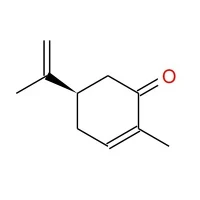
L-Carvone is a monoterpene ketone with the molecular formula C₁₀H₁₄O and a molecular weight of 150.22 g/mol. It is the R-(−)-enantiomer of carvone, responsible for the sweet spearmint character of Mentha spicata. Its mirror image, S-(+)-carvone, is the caraway-smelling enantiomer found in Carum carvi and dill.
Natural extraction begins with spearmint essential oil, where L-Carvone typically constitutes 60–80% of the oil depending on origin, harvest time, and distillation method. A 2023 study in Food Chemistry detected L-Carvone at 235.8–1600 mg/kg in Mentha spicata samples. The purification involves fractional distillation under reduced pressure, then solvent extraction and vacuum drying. The final FCC-grade material reaches 98–100% purity with an optical rotation between -57° and -62°.
Synthetic production starts from R-(+)-limonene, the abundant monoterpene in sweet orange oil at 90–95% concentration. Limonene is first converted to limonene nitrosochloride using nitrosyl chloride, then dehydrohalogenated to carvoxime, and hydrolyzed to carvone. The overall yield is typically 60–70% based on limonene. Because limonene is a byproduct of the citrus industry, this route is the cost-effective choice for most industrial applications.
How to Verify Origin: δ¹⁸O Isotope Analysis
The most reliable method to differentiate natural from synthetic L-Carvone is compound-specific δ¹⁸O isotope analysis using gas chromatography coupled with pyrolysis-isotope ratio mass spectrometry (GC-P-IRMS). Natural plant-derived carvone acquires its oxygen signature from environmental water through biosynthetic pathways. Synthetic carvone from petrochemical limonene carries a different signature.
A 2022 study published in Talanta established reference values for authentication. The study analyzed 45 commercial spearmint oil samples and found that natural carvone showed a mean δ¹⁸O value of 18.4‰, with a range of 14.1 to 22.1‰. Semi-synthetic carvone from limonene showed a mean value of 9.2‰.
| Item | δ¹⁸O Mean Value | Interpretation |
|---|---|---|
| Natural spearmint carvone | 18.4‰ (14.1–22.1‰) | Above 14‰ = natural origin |
| Semi-synthetic from limonene | 9.2‰ | Below 10‰ = synthetic or semi-synthetic |
| Commercial blends | Wide range (-1.5 to 18.4‰) | Requires batch-specific testing |
If you are paying a premium for natural L-Carvone, request the δ¹⁸O value in the COA. A natural-grade material should show δ¹⁸O above 14‰. A semi-synthetic material will typically fall below 10‰. If the supplier cannot provide this data, the natural claim is unverifiable. For the full specification, visit our L-Carvone product page.
Chiral GC Analysis: Why Optical Rotation Alone Is Not Enough
Optical rotation is the standard release test for L-Carvone. It only tells you the net rotation of the sample. A material with 5% D-Carvone contamination may still fall within the -57° to -62° specification if the measurement uncertainty is large enough. For oral care and confectionery applications, where consumers detect a caraway note at low threshold levels, this is not sufficient.
Chiral GC separates the two enantiomers on a chiral stationary phase, typically a derivatized cyclodextrin column. Common choices include 2,3-di-O-acetyl-6-O-tert-butyldimethylsilyl-β-cyclodextrin (TBDA-β-CD) or 2,3-di-O-methyl-6-O-tert-butyldimethylsilyl-β-cyclodextrin. Separation is based on the differential interaction of the enantiomers with the chiral cavity of the cyclodextrin.
A validated chiral GC method can achieve baseline separation of L- and D-carvone in under 30 minutes. The mass spectrometer detects the carvone peak at m/z 82, the base peak for both enantiomers. The ratio of peak areas gives the enantiomeric excess (ee). For food-grade L-Carvone, the ee should be ≥99.5%. Alfa Chemical provides chiral GC data with each batch on request. Request a batch COA for your application.
Cost Analysis: What the Price Difference Reflects
Natural L-Carvone is listed at $386 per kilogram for 1kg, dropping to $145 at 5kg. Synthetic L-Carvone from Chinese manufacturers is quoted at $120 per kilogram for 1kg, dropping to $65 at 25kg. That is a 2.5x to 5x price difference depending on quantity.
The global carvone market was valued at $57 million in 2024 and is forecast to reach $74.8 million by 2031, growing at a CAGR of 4.0%. Flavor applications account for 51.6% of the market, followed by oral care at 27.8% and aromatherapy at 12.4%. Both grades meet the same FCC specification for purity, optical rotation, and appearance. The difference is entirely about origin and what that origin allows you to claim on your finished product label.
When to Choose Natural vs Synthetic
Choose natural L-Carvone when: Your finished product will carry a natural flavor label claim. FDA and EU regulations governing natural flavor labeling require that the flavoring substance be derived from a natural source. A synthetic L-Carvone, even if chemically identical, cannot support a natural claim. Your brand positioning depends on clean-label or natural-origin messaging. Some retail channels in Europe and North America apply stricter scrutiny to natural claims.
Choose synthetic L-Carvone when: The application is industrial or technical, where natural-origin labeling is not required. This covers most detergent, industrial cleaner, and technical fragrance applications. The formulation is cost-sensitive and the finished product makes no natural-origin claim. Synthetic L-Carvone delivers identical sensory performance at a fraction of the cost.
Both grades work equally well in oral care formulations. A Swedish market study analyzed 66 toothpastes and found L-Carvone in 64 of them, at concentrations from 0.00005% to 0.35%. In 10 toothpastes, the concentration exceeded 0.1%. Higher concentrations were found when limonene was listed on the label, suggesting that the L-Carvone was either added directly or derived from limonene oxidation during storage. Whether the L-Carvone originated from natural or synthetic sources, its function in the formulation is identical.
Regulatory Status: Same for Both Grades
Both natural and synthetic L-Carvone share the same regulatory foundation. FEMA 2249. FDA GRAS status under 21 CFR 182.60, listed as a synthetic flavoring substance and adjuvant generally recognized as safe. The RIFM safety assessment evaluated l-carvone for genotoxicity, repeated dose toxicity, reproductive toxicity, local respiratory toxicity, phototoxicity, skin sensitization, and environmental safety, establishing a No Expected Sensitization Induction Level (NESIL) of 2600 μg/cm² for skin sensitization.
JECFA has noted that (+)-Carvone and (−)-Carvone should be evaluated separately, as they are not toxicologically identical compounds. This reinforces the importance of enantiomeric purity control. Regardless of whether the material is natural or synthetic, the COA must document the optical rotation and, ideally, the enantiomeric ratio.
Stability and Storage: What the Data Shows
A storage study examined caraway essential oil and pure carvone standards at 25°C and 40°C over an extended period. Carvone content remained almost constant over the entire storage period. Limonene, a more reactive monoterpene, declined by 9.2% in the essential oil matrix. Pure carvone showed a linear but slow degradation pattern at both temperatures. After twelve months of storage, the main degradation product of pure carvone was carvone-1,2-epoxide at 0.9% concentration.
Practical storage recommendation: L-Carvone should be stored sealed, protected from light, at ambient temperature. For extended storage beyond 12 months, refrigeration at 0–4°C is advisable. The 24-month shelf life stated on most commercial COAs is achievable under these conditions. For formulations requiring extended stability, microencapsulation in wax matrices can further reduce volatility and oxidation.
Procurement Checklist
When sourcing L-Carvone for any application, request the following from your supplier:
1. Batch-specific COA with actual optical rotation values, not just a range.
2. Chiral GC data showing enantiomeric excess (ee) ≥99.5%.
3. δ¹⁸O isotope analysis if natural origin is claimed.
4. Residual solvent data compliant with ICH Q3C.
5. Kosher and Halal certificates if required for your market.
6. Stability data for your specific storage conditions.
Which Grade Should You Choose?
The choice between natural and synthetic L-Carvone comes down to one question: does your finished product carry a natural-origin claim? If yes, you need natural-grade material with δ¹⁸O above 14‰ and documented isotope analysis. If no, synthetic L-Carvone delivers identical sensory performance at one-fifth to one-half the cost.
For oral care and confectionery, both grades work equally well as long as the enantiomeric excess is ≥99.5% and the optical rotation falls within -57° to -62°. Verify this with chiral GC data from your supplier, not just optical rotation.
Need a batch COA, TDS, or natural-origin verification?
Alfa Chemical supplies L-Carvone from Zhengzhou, China, with batch-specific COA, chiral GC data, and δ¹⁸O isotope analysis on request. Packaging from 100g R&D bottles to 200kg production drums.
About Alfa Chemical: Based in Zhengzhou, China, Alfa Chemical supplies fine chemicals and specialty intermediates to research and industrial customers worldwide.
Disclaimer: This article is for industrial and research reference only. Confirm specifications against the batch COA before use. No medical or therapeutic claims are made.
Read more about L-Carvone: L-Carvone CAS 6485-40-1 Product Page