





Introduction of CAS:2039-88-5 | 2-Bromostyrene
2-Bromostyrene is a brominated derivative of styrene, which is an organic compound with a vinyl group attached to a phenyl group. The bromine atom in 2-bromostyrene is positioned at the second carbon of the vinyl group, making it an important intermediate in various chemical reactions and syntheses.
Synthesis Analysis
The synthesis of substituted trans-β-bromostyrenes can be achieved through a one-pot two-step sequence involving a palladium(0) catalyzed coupling reaction of trans-1,2-Bis(tri-n-butylstannyl)ethylene with aromatic halides, followed by the addition of molecular bromine to the intermediate vinyl stannane without isolation2. This method provides a convenient route to obtain trans-β-bromostyrenes in moderate to high yields.
Specification of CAS:2039-88-5 | 2-Bromostyrene
|
ITEMS |
SPECIFICATION |
|
Refractive index |
n20/D 1.592(lit.) |
|
Boiling point |
102-104 °C/22 mmHg (lit.) |
|
Form |
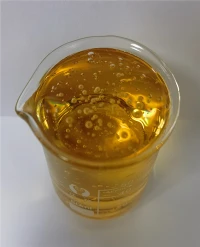
transparency liquid |
|
Color |
Colorless to yellow |
|
Density |
1.46 g/mL at 25 °C (lit.) |
|
Storage condition |
2-8°C |
Research Application of CAS:2039-88-5 | 2-Bromostyrene
Polymer Research and Applications
2-Bromostyrene plays a critical role in polymer science. Yuan et al. (2011) demonstrated its use in creating water-soluble brush polymers and polyelectrolyte copolymers. These copolymers have potential applications as stabilizers in heterophase polymerization and could exhibit ionic conducting properties (Yuan et al., 2011).
Quantum Mechanical Studies and Polymer Flexibility
Navarro et al. (2009) conducted quantum mechanical studies on the flexibility of polymers derived from 2- and 4-bromostyrene. By analyzing molecular structure changes from monomer to tetramer, they provided insights into how small molecular adjustments can affect polymer properties like glass transition temperature, demonstrating the importance of 2-bromostyrene in understanding and predicting polymer behavior (Navarro et al., 2009).
Photochemistry and Radical Reactions
In photochemical studies, the behavior of 2-bromostyrene derivatives during radical reactions has been elucidated. Gronheid et al. (2003) examined the photochemistry of (E)-bromostyrene, revealing insights into the formation of vinylic cations and radicals, which are fundamental in understanding the chemical reactivity of such compounds under light exposure (Gronheid et al., 2003).
Catalysis and Chemical Transformations
2-Bromostyrene has been involved in studies focusing on catalysis and chemical transformations. Feng et al. (2015) explored the bromination mechanism of specific derivatives, providing insights into the regioselective formation of brominated compounds and their potential in cross-coupling reactions (Feng et al., 2015).
Applications in Materials Science
The compound's significance extends to materials science, where its derivatives are used in creating functional materials for electronic devices. For instance, polymers carrying 2-bromostyrene units have been synthesized for applications in organic light-emitting diodes and other electronic devices due to their desirable photophysical properties (Peter & Thelakkat, 2003).


Hot Tags: cas:2039-88-5 | 2-bromostyrene, China cas:2039-88-5 | 2-bromostyrene manufacturers, factory, 4 4 1 2 4 5 tetrazine 3 6 diyl dibenzoic acid, Photoelectric Materials, DPD OXALATE, N N Diethyl p phenylenediamine oxalate


