

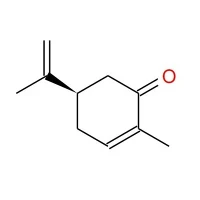


A drum of spearmint ketone looks harmless on the loading dock, but release decisions are made from documents and a short set of checks, not from the label alone. Here is what QA should compare before a lot of L-carvone goes into approved stock.
Summary: This incoming-QC checklist for L-carvone (CAS 6485-40-1) covers document and label review, appearance and odor verification, the specification points that most often drive rejection, how to hold a non-conforming lot, and what to compare when qualifying a second supplier. It does not cover formulation use levels, storage shelf-life studies, or regulatory limits, which are addressed in our linked articles.
A flavor raw material passes incoming inspection when the paperwork, the physical sample and the agreed specification all agree. For L-carvone (CAS 6485-40-1), the stakes are sensory: the wrong enantiomer or an aged lot can introduce a caraway note that no downstream blending step fully removes. The checks below are framed for QA and procurement at receipt, before the material is released to production.
This guide is about accepting or rejecting a lot. How to use the material in a flavor, how natural and synthetic grades differ on origin, and how enantiomeric purity is verified in the lab are covered in the linked articles at the end of this page.
▍First: Match the Documents to the Label
Before opening any container, confirm the paper trail. A mismatch here is faster to resolve than a sensory dispute after the seal is broken.
- Batch identity. The lot number printed on the drum or bottle must match the lot number on the accompanying COA. Note the product name, CAS number 6485-40-1 and any grade or purity claim on both documents.
- COA parameters. Check that the certificate lists GC purity, optical rotation, refractive index, density, water content and appearance, and that each reported value sits inside the agreed specification. Residual solvents should be reported against ICH Q3C where that limit applies to your spec.
- SDS alignment. The safety data sheet must correspond to the same product and CAS. Keep the SDS on file for handling, spill and disposal reference; the hazard statements for the lot are taken from that document, not from a generic flavoring assumption.
- Packaging and seal. Confirm the packaging size matches the order, the seal is intact, and there is no leakage, swelling or dried residue around the closure. Record packaging condition on the incoming record.
The table below lists the specification points an incoming check commonly reviews. Reference ranges come from public reference data and the product page; the release criteria for your purchase order should be the agreed spec sheet, not this table alone.
| Check point | Typical reference range | Why it matters at receipt |
|---|---|---|
| Appearance | Colorless to pale yellow, clear liquid | Dark amber, haze or settled matter points to aging, oxidation or contamination. |
| GC purity | ≥ 99.0% | Lower main-peak area leaves more room for off-notes and unknown impurities. |
| Optical rotation | −62° to −57° | Rotation outside the range can indicate the wrong enantiomer or a mixed lot; verify against chiral data. |
| Refractive index (n20/D) | 1.495 – 1.499 | A drifting refractivity reading suggests composition change or improper dilution. |
| Density (25 °C) | 0.956 – 0.960 g/mL | Density shift supports a suspected composition or contamination issue flagged elsewhere. |
| Water content (KF) | ≤ 0.10% | Elevated moisture can indicate a breached seal or a water-contaminated lot. |
Ranges are public reference values. Confirm the upper and lower limits against your approved spec sheet and the batch COA before release.
▍Appearance and Odor Check at the Bench
Once the documents check out, open one representative sample under normal ventilation. Sensory screening is a fast screen; it is not a substitute for the laboratory numbers on the COA.
- Look at the liquid. Hold the sample against white light. It should be clear and pale, without cloudiness, particles, a separate layer or a dark brown cast.
- Sniff a prepared strip. Use a clean odor strip, not direct inhalation from the bottle. L-carvone should read as a fresh, sweet spearmint. A caraway, celery-like or bitter-spicy note raises a flag; that character is associated with the mirror-image D(+)-carvone (CAS 2244-16-8) or with aged material.
- Compare to a retained sample. Where an approved reference lot is on file, smell and sight the new batch alongside it. A clear shift in color or aroma is grounds for a hold even if the COA numbers look acceptable.
- Record the observation. Note appearance, aroma and any deviation on the incoming record, including the sample time and the person who checked it. Attach the retained sample for traceability.
Watch out: Do not release a lot on odor alone when the COA is missing or the lot number does not match. Conversely, a clean sensory impression does not override a parameter that is outside specification. When in doubt, hold the lot and send it for confirmatory testing rather than releasing it to production.
▍Signs That Trigger a Hold or Recheck
The following are common reasons to isolate a lot pending review. They are screening signals; the final disposition follows your internal non-conforming material procedure and the supplier's response.
| Observation | What to review |
|---|---|
| Label or lot number does not match the COA | Confirm shipment against the order; request the correct certificate before any release. |
| Dark color, haze or sediment in the liquid | Check seal integrity and storage history; review oxidation or contamination with the supplier. |
| Caraway, bitter or harsh aroma | Recheck optical rotation and chiral composition; consult the purity verification guide linked below. |
| A COA parameter sits outside the agreed spec | Do not release; route through non-conforming material review and notify the supplier. |
| Damaged, leaking or unsealed packaging | Quarantine the container; assess whether the contents were exposed to air, moisture or contamination. |
▍Comparing Lots and Qualifying a Second Supplier
When more than one supplier is under evaluation, compare data on the same parameters rather than comparing marketing claims. Keep a side-by-side record across recent lots so batch-to-batch consistency is visible over time.
- Align the spec first. Both suppliers should report the same set of parameters: GC purity, optical rotation, refractive index, density, water content and appearance. A supplier that omits rotation or refractive index leaves a gap in your comparison.
- Track variation across lots. Note how far each supplier's reported values sit from the spec center, not only whether they pass. Small, stable variation is easier to formulate against than a lot that swings near a limit each time.
- Keep retained samples. Retain a labeled sample from each approved lot for the internal retention period, so an off-note complaint can be traced back to a specific batch.
- Ask for the backing data. Where enantiomeric identity or origin matters to your specification, request the chiral data or origin documentation rather than relying on a purity percentage alone; the linked articles explain what those tests show.
▍Handling at Receipt
L-carvone is a flammable liquid (UN 1224). At the receiving area, keep containers away from ignition sources and heat, open samples in a ventilated area, and wear chemical-resistant gloves and eye protection. The exact hazard statements, first-aid measures and disposal guidance for the lot are on its SDS; follow those sections rather than a general assumption about flavoring materials.
Frequently Asked Questions
QWhat should I check on the L-carvone COA before release?
Confirm the lot number matches the label, then review GC purity, optical rotation, refractive index, density, water content and appearance against your agreed spec. Residual solvents should be reported where ICH Q3C applies. Any parameter outside the spec, or a missing certificate, should hold the lot pending review.
QHow can I tell an incoming lot is the spearmint enantiomer and not caraway?
Fresh sweet spearmint indicates the L-form; a caraway or celery-like note raises a flag for the D-enantiomer or aged material. The definitive check is optical rotation together with chiral GC composition, reported on the COA. Our enantiomeric purity article describes how that verification works.
QIs a clean smell enough to accept the lot?
No. Sensory screening supports the decision but cannot override a COA parameter that is out of specification, a document mismatch, or packaging damage. Release only when paperwork, physical check and specification all agree; otherwise hold and recheck.
QWhat do I compare when qualifying a second carvone supplier?
Compare the same reported parameters across their lots: purity, rotation, refractive index, density, moisture and appearance. Look at variation from the spec center over several lots, and request chiral or origin documentation where your specification requires it. Keep retained samples from each approved lot for traceability.
QCan you provide COA and SDS to match my current supplier's documentation?
Send the parameters and format from your current COA. We check whether a standard FCC grade matches or whether a custom specification is needed. Batch measured values are reported on the COA, and the SDS is provided with the order.
Manufacturing & Supply Note
Alfa Chemical is a manufacturer and supplier of material, life-science and specialty chemicals, based in Zhengzhou, Henan, China. We support supplier qualification from lab samples through commercial supply.
Our L-carvone, CAS 6485-40-1 ships with batch-specific COA and SDS on request. For the underlying methods, see our articles on enantiomeric purity verification and natural-versus-synthetic origin. To request qualification data or a sample, contact our technical team.
Cite this article
Alfa Chemical Quality Team. "L-Carvone (CAS 6485-40-1): An Incoming QC and Batch Release Checklist for QA and Procurement." Alfa Chemical Technical Articles, November 2026.
URL: https://www.alfa-industry.com/info/l-carvone-6485-40-1-incoming-qc-batch-release-103752266.html
Reference ranges are public catalogue values; measured values for your lot are reported on the Certificate of Analysis. This article is for industrial and quality reference only.
Related Reading
- L-Carvone (CAS 6485-40-1) product specification - purity, optical rotation, packaging and lot documentation.
- L-Carvone enantiomeric purity and verification method - chiral GC and how the spearmint versus caraway enantiomer is confirmed.
- Natural versus synthetic L-carvone: origin verification and grade selection - source routes, isotope authentication and when each grade applies.